Chain Drive vs. Premium Garage Door Openers
Old opener finally died? Learn the real differences between chain drive, builder-grade, and premium garage door openers so you can pick the right brand and setup.
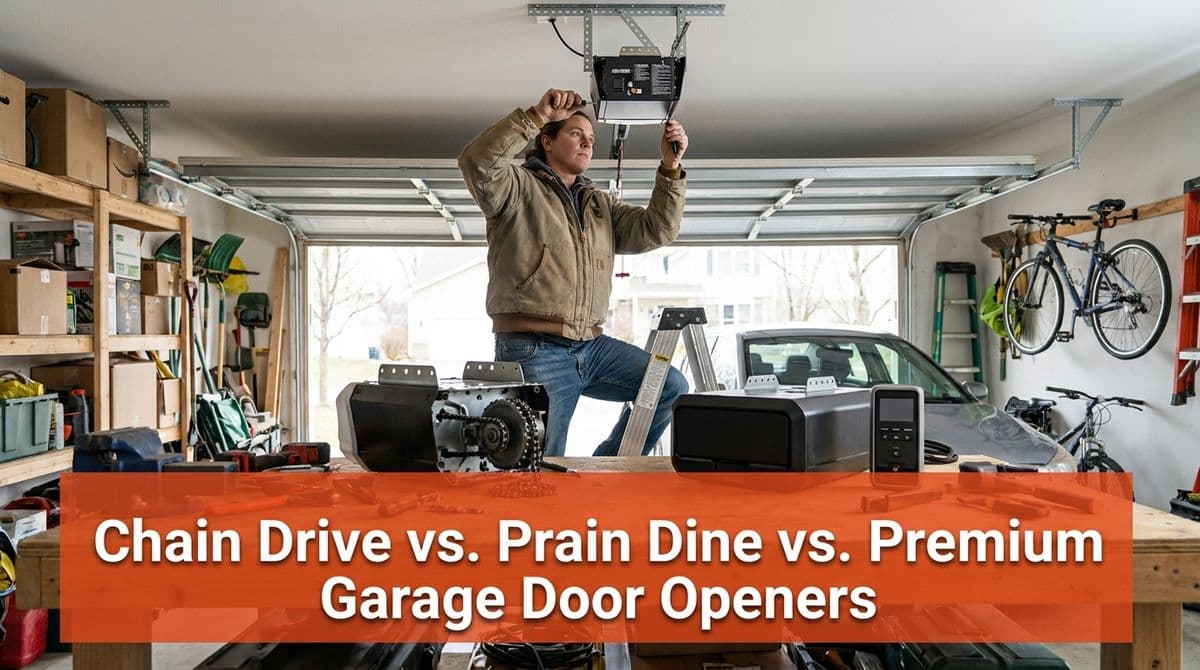
Chain Drive vs. Premium Garage Door Openers: A Real Homeowner Question
We recently got a call from a customer — let’s call him Tom — who wanted a new garage door opener installed. He told us, “We don’t need anything fancy. Just a half-horsepower chain drive. No door pad or all that.”
Tom’s current opener had done its job for about 30 years before finally giving up. He liked the brand he already had (a builder-grade unit from a big box store) but was curious why we were recommending a more premium option and whether it was worth the extra cost.
If you’re in the same boat — your old opener’s finally done, and you’re staring at options ranging from “basic chain drive” to “premium LiftMaster with solid rail” — this breakdown is for you.
What Tom Asked Us on the Phone
Here’s what Tom wanted to know, in plain language:
- “Is a basic half-horsepower chain drive good enough?”
- “Do I really need anything other than a remote? No keypads or bells and whistles?”
- “What’s the difference between a builder-grade opener and a premium opener?”
- “Why is one brand installed for around $575 and another for around $750?”
Those questions come up all the time, so we walked him through the same comparison we’ll walk you through here.
Chain Drive Basics: The “Work Truck” of Openers
Most budget-friendly openers Tom was looking at use a chain drive. Think of it like a bicycle chain pulling your door up and down.
Pros of chain drive openers:
- Affordable: Usually the lowest price point.
- Durable: When installed and maintained properly, they can last decades — Tom’s old one made it about 30 years.
- Good for standard doors: A 1/2 HP (or equivalent) unit is usually fine for a typical single or double steel residential door.
Cons of chain drive openers:
- Noisier: You’ll hear and sometimes feel it inside the house, especially with bedrooms above the garage.
- More vibration: Cheaper rails and heads can rattle more, which adds to the noise and wear.
If you have a detached garage, don’t mind some noise, and are mostly budget-focused, a basic chain drive is often perfectly fine.
Builder-Grade vs. Premium: Where the Price Difference Comes From
On Tom’s call, we explained two main options we install regularly:
- Builder-grade (e.g., Genie or Chamberlain): Around $575 installed in our area (materials, parts, and labor).
- Premium (e.g., LiftMaster with one-piece steel rail): Around $750 installed with a one-year parts warranty.
Here are the key differences that matter to a homeowner:
1. Rail System: One-Piece Steel vs. Multi-Piece
Most big-box-store units use a multi-piece rail that ships in a smaller box. It’s convenient for shipping and DIY installation, but each joint can flex a little.
Premium openers typically use a one-piece solid steel rail:
- Less flex and vibration.
- Smoother, quieter operation over time.
- Better long-term durability, especially on heavier doors.
This is one of the big reasons we keep LiftMaster one-piece rail units on the truck as our go-to premium option.
2. Components and Build Quality
Builder-grade openers aren’t “bad” — Tom’s lasted about 30 years — but premium brands usually have:
- Heavier-duty internal gears and sprockets.
- More robust motor housings.
- Higher-quality safety sensors and controls.
That can mean fewer service calls and a smoother door over the life of the opener.
3. Warranty and Support
On that call, we quoted Tom a one-year parts warranty on the premium unit. Builder-grade units can have decent manufacturer warranties, but in practice:
- Premium models often have stronger manufacturer coverage on the motor and belt/chain.
- Parts are easy to source and service through professional channels.
Features: Do You Really Need “All the Extras”?
Tom was very clear: “We don’t need anything fancy. We don’t need a door pad and all that.” And that’s completely fine.
When we install, we can keep it as simple as:
- 1–2 remotes programmed to your vehicles.
- A basic wall button inside the garage.
But for other homeowners, it can be worth considering:
- Keypad outside: Handy for kids, dog walkers, or if you lock yourself out.
- Smartphone control: Many premium openers integrate with apps so you can check and operate your door from anywhere.
- Battery backup: Keeps the opener working during a power outage.
You don’t have to get every feature, but knowing what’s available helps you choose the right model the first time.
How to Decide: Which Opener Is Right for Your Home?
Here’s the same thought process we walked through with Tom, turned into a quick checklist.
Choose a Builder-Grade Chain Drive If:
- You want to keep upfront cost as low as possible.
- Your garage is detached or noise isn’t a big issue.
- You’ve had good experience with brands like Genie or Chamberlain.
- You don’t need smart features or lots of accessories.
Consider a Premium Opener (Like LiftMaster) If:
- Your garage is attached and near bedrooms or living areas.
- You plan to stay in the home for years and want long-term reliability.
- You want smoother, quieter operation and a solid one-piece rail.
- You like the idea of better warranty support and pro-grade components.
Our Advice to Tom — And to You
On the phone, once we laid out the options, Tom said his current brand had been “fine” and that 30 years of service was hard to argue with. For him, sticking with a builder-grade opener made sense, especially since noise and extra features weren’t a concern.
For another homeowner, that extra investment in a premium LiftMaster with a solid steel rail might be the better fit — especially in an attached garage where smooth, quiet operation and long-term durability really pay off.
If your opener has finally given up and you’re not sure which direction to go, we’re happy to talk through your specific door, garage layout, and budget and recommend the right opener — not just the most expensive one. Just like we did for Tom.