How to Modernize an Older Garage Door Opener System
Got an older garage door opener that won’t go smart? Here’s how we help homeowners upgrade to modern smart, jackshaft, and contractor-grade opener options.
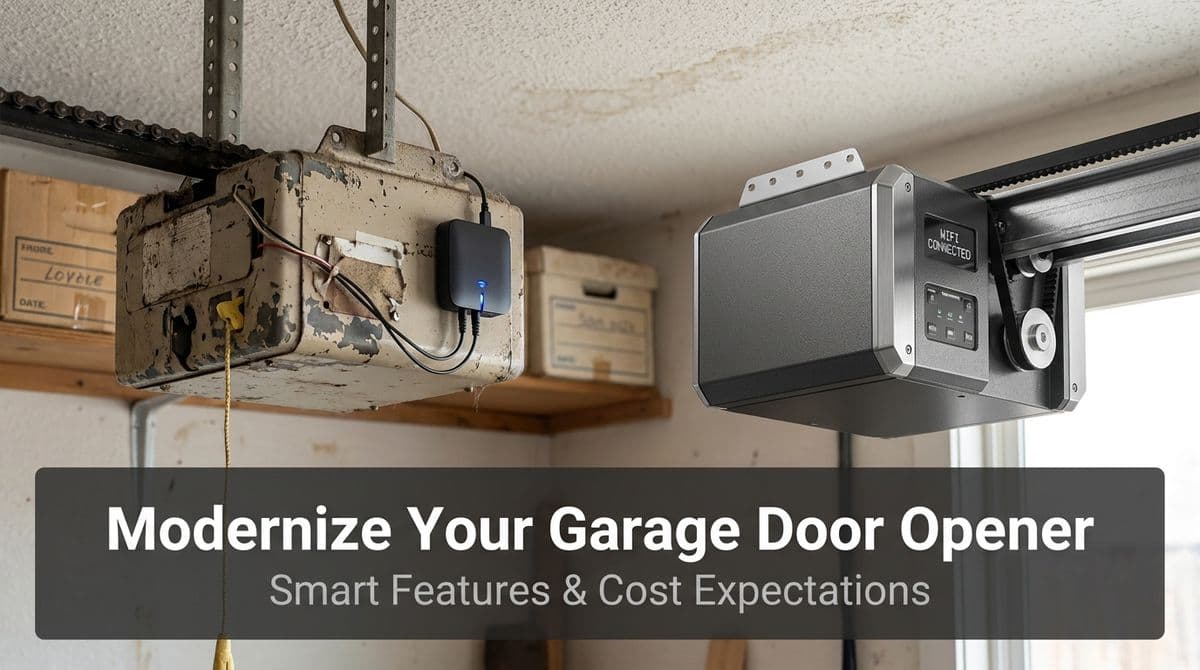
Bringing a 2000-Era Garage Door Into the Smart Home Age
We recently got a call from a homeowner — let’s call him Mark — who had two single-car garage doors, each with its own opener from around the year 2000. The doors themselves were in good shape, but the openers? Not so much.
Mark had tried to add a little plug-in “smart” conversion kit so he could control the doors from his phone, but he quickly discovered what a lot of folks with older Craftsman and similar units learn: the technology just wouldn’t play nice. The opener was simply too dated to integrate cleanly with newer home security and smart home systems.
That call turned into a great conversation about how to modernize an older garage door setup: smart openers, wall-mounted jackshaft units, and what kind of pricing to realistically expect. If you’re in a similar spot, this breakdown is for you.
Do You Need New Doors, or Just New Openers?
The first thing we asked Mark was simple: “Are the doors themselves okay?” In his case, yes — the panels, springs, and tracks were all functioning well. That meant we could focus solely on replacing the openers.
Many homeowners assume “my system is old, so I must replace everything.” That’s not always true. You may only need to modernize the opener if:
- The door moves smoothly by hand when disconnected from the opener
- The springs are properly balanced (the door stays about halfway open when lifted manually)
- The panels aren’t cracked, rotted, or badly bent
If the door hardware checks out, then upgrading your opener is usually the most cost-effective way to add smart features and better reliability.
Smart Garage Door Openers: What “App Accessible” Really Means
Mark’s main goal was to control his garage through his phone and tie it in with his home security. That’s where modern smart openers shine. Most of the units we install today come with built-in app connectivity, often through platforms like myQ.
With these systems you can typically:
- Open and close your door from your smartphone, anywhere you have service
- Get alerts if the door is left open
- Set schedules (for example, auto-close every night at 10 p.m.)
- Share access with family members and trusted friends — often 10–15 people
In Mark’s case, his older Craftsman unit just wasn’t compatible with add-on smart kits, so we recommended replacing the openers with new smart-ready models rather than fighting the old technology.
Overhead Trolley Openers: Chain vs. Belt
Most garages still use a traditional overhead opener mounted in the center of the ceiling. A rail runs from the opener down to the header above the door, and a trolley moves along that rail to pull the door up and down.
We walked Mark through two main overhead options:
- Basic Chamberlain 1/2 HP unit (chain or belt drive)
Installed price: about $575 per opener, including removal and disposal of the old unit and a one-year parts warranty. - Contractor-grade LiftMaster overhead unit
Installed price: about $750 per opener. This version typically has a more robust one-piece steel rail and heavier-duty components.
Both options include app accessibility and smart control setup. The main choices you’ll make are:
- Chain drive – Slightly louder but very durable and budget-friendly
- Belt drive – Much quieter (great if there’s a bedroom above the garage)
Wall-Mounted Jackshaft Openers: Cleaner, Quieter, and Premium
Mark had heard about the wall-mounted openers — the ones that free up ceiling space. He was especially interested in these jackshaft units, so we dug into those details together.
A jackshaft opener mounts on the wall beside the garage door, driving the torsion shaft directly instead of pulling from the center of the ceiling. Benefits include:
- More headroom – Great for tall vehicles, storage racks, or car lifts
- Cleaner look – No long rail running down the middle of your garage
- Quieter operation – Less vibration through the ceiling
- Built-in smart features – App control, motion-sensing lights, etc., depending on the model
These units are especially well-suited to insulated doors, like Mark’s, because those doors tend to be heavier and pair nicely with the direct-drive style.
For pricing, we told him to expect:
- LiftMaster jackshaft opener: starting around $1,300 installed
- Higher-end models with extra features: up to around $1,500 installed
That price includes professional installation, setup of the smart app, and disposal of the old opener.
Feature Levels at a Glance: Which Opener Fits You?
To help Mark compare his options, we broke the choices into simple “levels.” Here’s a similar breakdown you can use:
- Level 1 – Value Smart Overhead (around $575 installed)
- Chain or belt drive
- Basic smart app control
- Good for standard single-car doors and budgets
- Level 2 – Heavy-Duty Smart Overhead (around $750 installed)
- Contractor-grade components and solid one-piece rail
- Smart app control, better longevity
- Ideal if you use the garage door as your primary entry
- Level 3 – Premium Jackshaft Wall-Mount ($1,300–$1,500 installed)
- Frees up ceiling space
- Quiet, smooth operation
- Best for finished garages, tall ceilings, or insulated/heavier doors
Is Your Existing Opener Failing? A Quick Checklist
Before Mark called, he was already frustrated by the lack of smart compatibility, but there were also a few age-related concerns. If you’re wondering whether it’s time to replace your opener, here are warning signs we see all the time:
- Unusual noises – Grinding, squealing, or rattling that wasn’t there before
- Inconsistent operation – Door doesn’t open every time you hit the button
- No safety sensors – Very old units may predate modern photo-eyes
- Intermittent remotes – New batteries, same problem
- Difficulty finding parts – Manufacturer no longer supports the model
- No rolling-code security – Older openers can be easier to exploit
Any one of these is a good reason to at least price out a modern replacement. If you’re checking several of these boxes, upgrading isn’t just about convenience; it’s about safety and security, too.
What to Expect From a Professional Upgrade
For Mark, we put together an estimate showing all three options on a single ticket, with each opener type listed as its own line item. That way he could see the cost difference clearly and decide whether to upgrade one opener, both, or mix and match.
When we install new openers, our process typically includes:
- Removing and disposing of the old openers
- Installing new opener(s), rails, and safety sensors
- Connecting and programming remotes and keypads
- Setting up the smart app on your phone and walking you through features
- Testing the door balance and safety systems
By the end, you’ve essentially brought your garage into the same smart ecosystem as the rest of your home — without necessarily replacing the doors themselves.
Thinking About Modernizing Your Own Garage?
If you’re sitting on a 20–25-year-old opener that won’t talk to your home security system or smartphone, you’re in the same boat Mark was in. The good news is, you’ve got options — from budget-friendly smart overhead units to premium wall-mounted jackshaft systems.
Whether you just want a quieter opener or a fully connected, app-controlled setup, we’re happy to walk through your doors, your usage, and your budget to recommend the right fit. A quick conversation and a clear estimate can help you decide how to bring your older garage system into the modern smart home world.